Hours: Open 24/7

Local / State Regulations & Compliance Guide for Temporary Site Rentals

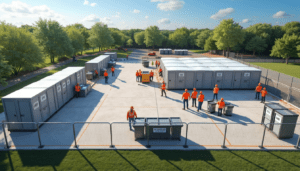
Whether you’re managing a construction site, planning an outdoor event, or coordinating disaster-response facilities, compliance matters. Temporary site rentals like portable toilets, dumpsters, fencing, and sanitation stations must meet local, state, and federal regulations.
Non-compliance can lead to:
Costly fines
Project delays or shutdowns
Health and environmental hazards
Legal violations under OSHA or EPA
This guide breaks down everything you need to know to stay compliant and operate responsibly at any temporary site.
1. Why Compliance Matters
1. Safety & Public Health
Clean, well-managed sanitation prevents disease transmission and protects workers and the public.
Reference: OSHA Sanitation Standards → https://www.osha.gov/laws-regs/regulations/standardnumber/1926/1926.51
2. Legal Liability & Fines
Failure to provide basic sanitation or properly manage waste can result in OSHA penalties or legal citations.
Penalties Reference: https://www.osha.gov/penalties
3. Professional Responsibility
Compliance communicates reliability and enhances your organization’s reputation.
4. Avoiding Downtime
Unannounced inspections can shut down non-compliant sites. Proper planning prevents costly interruptions.
2. Portable Toilet Regulations & Sanitation Requirements
OSHA and PSAI (Portable Sanitation Association International) define sanitation standards for job sites.
Required Toilets per OSHA (29 CFR 1926.51)
| Number of Workers | Required Toilets |
|---|---|
| 1–20 workers | 1 toilet |
| 21–200 workers | 1 toilet + 1 urinal per 40 workers |
| 201+ workers | 1 toilet + 1 urinal per 50 workers |
OSHA Source:
https://www.osha.gov/laws-regs/regulations/standardnumber/1926/1926.51
Additional Requirements
Handwashing Stations
Must provide potable water, soap, and drying materials.
CDC Hygiene Guidance: https://www.cdc.gov/handwashing/
ADA-Compliant Restrooms
Required at public events or workplaces with disabled employees.
PSAI Accessibility Standards: https://psai.org
Placement & Maintenance Requirements
Toilets must be placed within a short walking distance.
Must be cleaned, pumped, and restocked regularly.
Doors must lock; units must be ventilated.
Unit Types Allowed Where No Sewer Exists
Chemical toilets
Recirculating toilets
Flush units with holding tanks
3. Waste Management & Dumpster Compliance Rules
Waste handling at temporary sites is regulated by the EPA under the Resource Conservation and Recovery Act (RCRA).
EPA Waste Regulations:
https://www.epa.gov/rcra/resource-conservation-and-recovery-act-rcra-overview
Key Compliance Requirements
1. Waste Segregation
Separate:
Human waste
Solid construction waste
Recyclables
Hazardous materials
Hazardous waste rules:
https://www.epa.gov/hw/managing-your-hazardous-waste
2. Licensed Waste Haulers
Waste must be removed by a licensed disposal service.
Many states (e.g., Georgia, Florida, Oregon) require special transporter permits.
3. Proper Dumpster Sizing & Placement
Avoid overloading
Prevent leakage
Use covers to prevent contamination
Keep away from water bodies, storm drains, and public paths
4. Required Documentation
Maintain:
Waste manifests
Service logs
Disposal receipts
Hauler permits
EPA Manifest System:
https://www.epa.gov/e-manifest
4. Temporary Fencing & Site Access Regulations
Temporary fencing ensures site security, protects pedestrians, and complies with city or state building codes.
General Requirements
1. Height & Stability
Construction sites: 6–8 ft fencing depending on state
Crowd control: 3–4 ft barricades
Example: Oregon Building Codes Division → https://www.oregon.gov/bcd
2. Safety & Visibility
Must include signage
Night projects require lighting
Must not obstruct ADA-compliant access paths
3. Public Events
Event organizers must comply with local city ordinances, fire codes, and ADA accessibility requirements.
5. Complete Compliance Checklist for Temporary Site Rentals
Sanitation
✓ Correct number of toilets (OSHA ratios)
✓ ADA units (if public or disabled employees present)
✓ Handwash stations with potable water
✓ Regular pump-out & sanitation schedule
Waste Management
✓ Dumpster sized for waste volume
✓ Segregate waste streams
✓ Licensed hauler
✓ Waste manifests & documentation
✓ Dumpsters covered & secured
Temporary Fencing
✓ Meets height & code requirements
✓ Secure and stable
✓ Clear worker/public access
✓ Proper lighting and signage
Documentation
✓ Permits
✓ Service logs
✓ Waste disposal receipts
✓ Inspection forms
6. What Happens If You Fail to Comply
❌ OSHA fines (can exceed $16,000 per violation)
❌ Project shutdowns or delays
❌ Environmental penalties for leaks, spills, or illegal dumping
❌ Lawsuits & liability issues
❌ Loss of business reputation
This is why working with experienced, compliant rental providers is critical.
7. Best Practices for Site Managers and Rental Providers
Choose vendors with proven compliance expertise
Create a site map before equipment delivery
Build flexibility for weather, traffic flow, and site changes
Keep documents organized for inspections
Train crews on sanitation, waste, and safety guidelines
Conclusion
Temporary site rentals—portable toilets, fencing, dumpsters, and wash stations—are more than conveniences. They are legally regulated site necessities. By following OSHA, EPA, PSAI, and local codes, you improve safety, avoid fines, and protect your project’s timeline.
Use this guide as your compliance framework, and always verify state and municipal rules before setup.

Organizing Materials and Equipment on Job Sites and at EventsLooking for reliable shower trailer rentals...
Temporary Fencing Solutions: Security, Safety, and ComplianceLooking for reliable shower trailer rentals...
Worker Wellness Programs: Why Construction Companies Are Investing in On-Site Shower FacilitiesLooking...
Event Planning 101: The Hidden Costs of Skipping Professional Sanitation SolutionsLooking for reliable...
Portable Restroom Facilities: Essential Infrastructure for Large Construction ProjectsLooking for reliable...
Boost Event Comfort with ADA Sanitation UnitsLooking for reliable shower trailer rentals for your event...
Office Trailers: Planning a Mobile WorkspaceLooking for reliable shower trailer rentals for your event...
Office Trailers: Planning a Mobile Workspace-[Copy #8870]Looking for reliable shower trailer rentals...
Dumpster Rental Mistakes Event Planners MakeLooking for reliable shower trailer rentals for your event...
Temporary Fencing Tips for Safe Job SitesLooking for reliable shower trailer rentals for your event...