Portable Sanitation · Oregon & Washington

Portable Toilet Rentals in Oregon & Washington

Clean, inspected units delivered on a hard arrival window. RHC Site Services rents porta potties and portable toilets to construction sites, job sites, and events across Oregon and Washington.

48hr
Standard delivery window
6
Equipment categories, one contact
8
Cities across OR & WA
$0
Hidden fees. Ever.
01 / Unit Types

Standard, ADA, and Handwash: What's the right setup for your site?

Three unit classes cover almost every construction site and event scenario in Oregon and Washington. Pick by use case, or call RHC and we'll spec it for you in under five minutes.

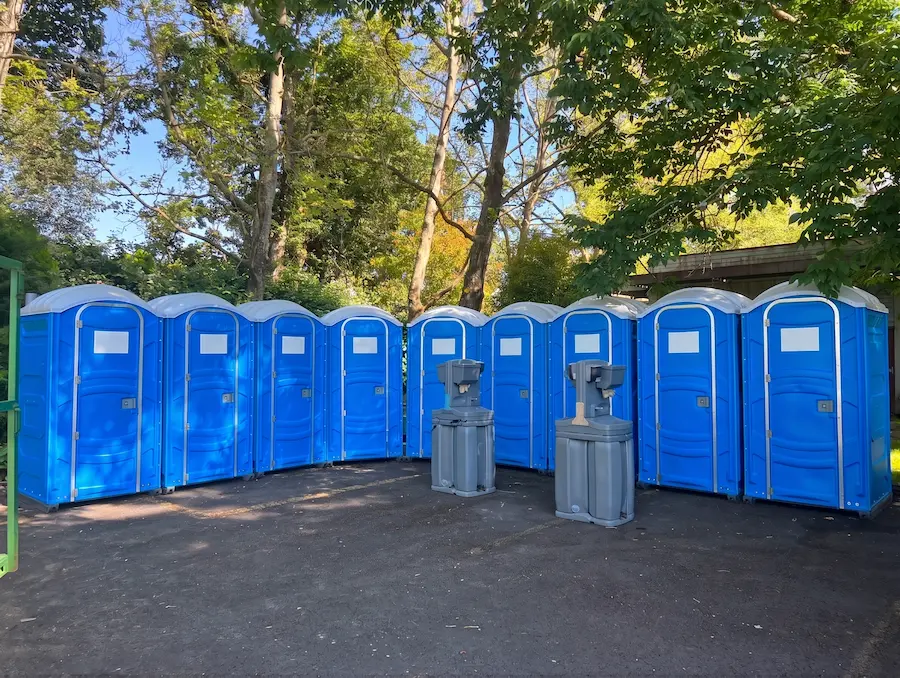
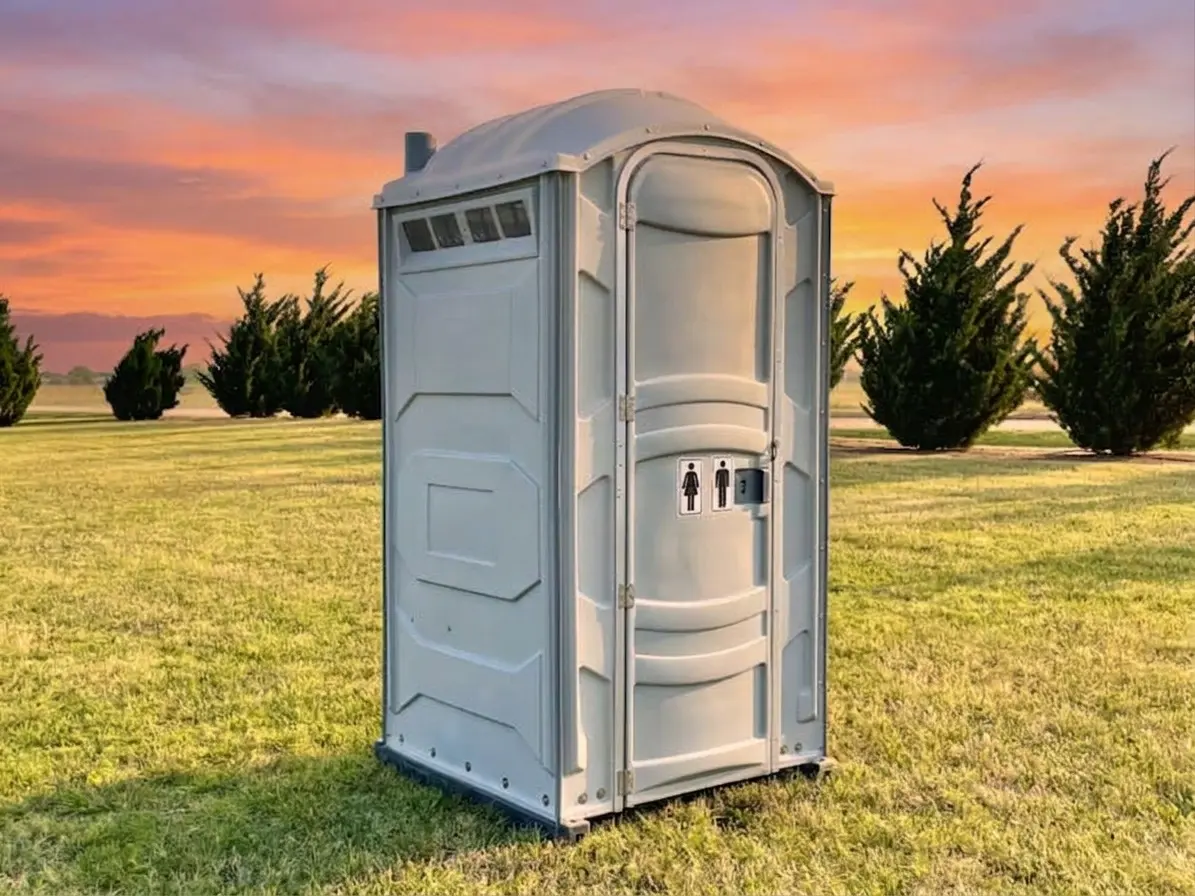
Standard portable toilet
01 / Standard

Standard Portable Toilet

The go-to unit for construction sites and active job sites. Single-occupancy, ventilated, with hand sanitizer and high-capacity tank for heavy daily use. OSHA-compliant: your site passes inspection and your crew always has a working sanitation option.

Dimensions44" W × 48" D × 90" H
Tank Capacity60–70 gal (approx. 150 uses per service)
Hand SanitizerDispenser included, standard
VentilationRoof vent + translucent roof panel
OccupancySingle-occupancy
Industry Standard (ANSI Z4.3)Up to 10 workers per unit, serviced weekly
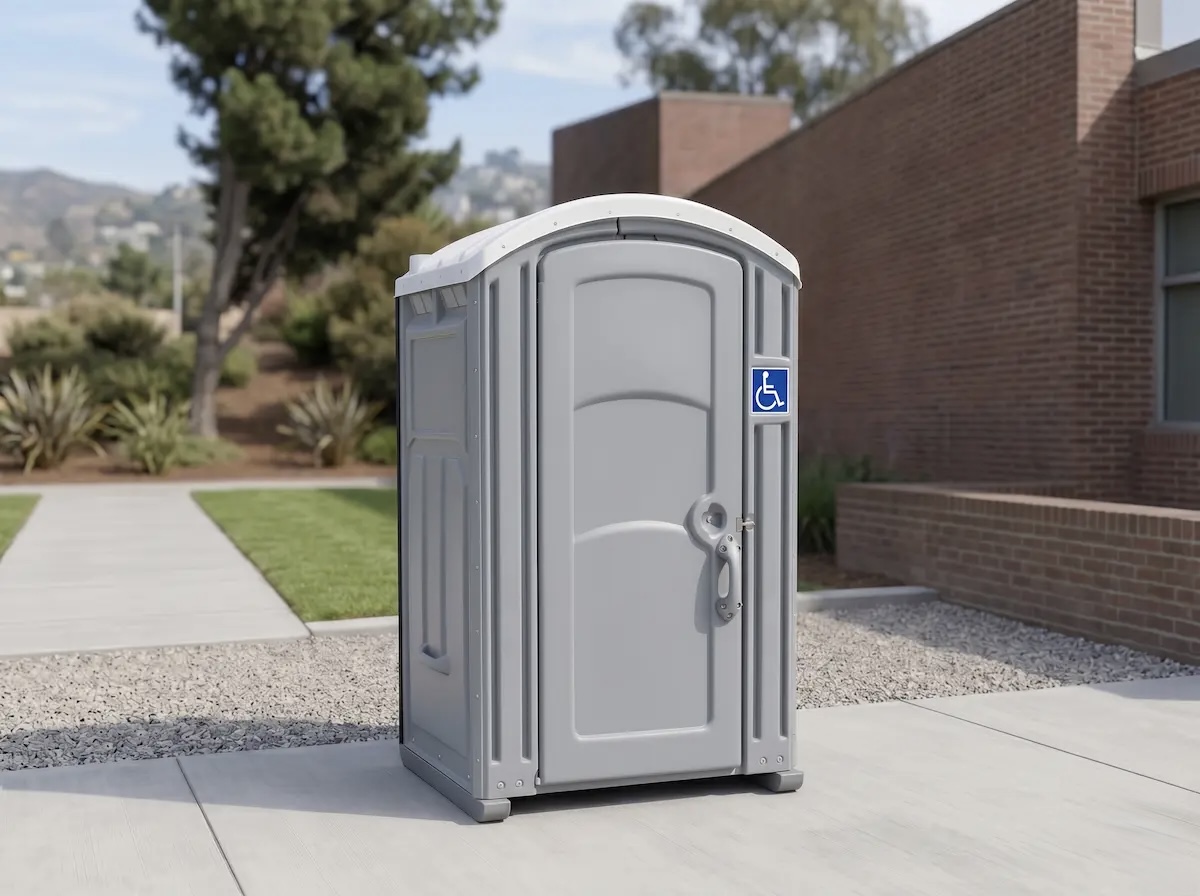
ADA-compliant accessible portable toilet
02 / ADA

ADA-Compliant Portable Toilet

Larger footprint, interior grab bars, anti-slip flooring, and full wheelchair accessibility. Required, not optional, for any public event or job site where workers or guests with mobility limitations are present. Don't wait until an inspector flags it.

Dimensions60" W × 60" D × 90" H
Interior Turning Radius60" clearance (full wheelchair access)
Door Opening32" clear width, outswing
Grab BarsRear wall + lateral side wall
FloorAnti-slip textured surface
ComplianceADA Title II & Title III compliant
Standalone handwashing stations beside standard portable toilets on a job site
03 / Handwash

Standalone Handwashing Station

Sanitizer dispensers come standard on every unit above, but they don't satisfy every site. Oregon OSHA requires washing facilities where crews handle paints, coatings, herbicides, or other contaminants that are harmful on skin, and King County requires hot and cold running water within 200 feet of food service at events. A standalone station pairs with any unit on this page, no plumbing and no power needed, and gets refilled on the same service visit as your toilets. Your crew actually washes up at lunch, and your sanitation plan holds up when someone checks it.

ConfigurationTwo-sided · two users at once
Fresh Water20–24 gal, the standard station size in the Portland metro market
CapacityRoughly 350 handwashes per fill
Gray WaterSealed tank, pumped out at service
OperationHands-free foot pump · no plumbing, no power
Food EventsHeated stations for King County hot-and-cold-water compliance
02 / Sizing Guide

How many portable toilets does your site actually need?

The two variables that determine unit count are headcount and duration. Use the tables below as a starting point, then tell us your specifics in the quote form and we'll confirm the right number for your exact situation.

For Construction Sites · OSHA 1926.51 Minimum (Federal and Oregon)

Crew SizeLegal Minimum
1–20 workers1 toilet
21–40 workers1 toilet seat and 1 urinal
41–80 workers2 toilet seats and 2 urinals
81–199 workers1 toilet seat and 1 urinal per 40 workers
200 or more1 toilet seat and 1 urinal per 50 workers

Washington is stricter under WAC 296-155-140: 1 toilet for 1–10 workers, 2 for 11–25, 3 for 26–40, 4 for 41–60, 5 for 61–80, then one more for each additional 20. Servicing: an unsanitary toilet does not count toward the minimum, and OSHA's 2006 interpretation letter gives once a week for a toilet used by up to 10 people, or twice a week for 20. Shifts: the count is the most workers on site at one time, the way OSHA counts in permanent workplaces (1910.141). A second shift uses the same units again, and industry guidance doubles the unit count for two 8-hour shifts.

Read the full OSHA portable toilet requirements for Oregon and Washington →

For Events · Industry Guidance

Guest CountUp to 4 HoursOver 4 HoursOver 4 Hours, Alcohol Served
50 guests1 unit2 units2 units
100 guests2 units3 units3–4 units
200 guests4 units5–6 units6–7 units
500 guests10 units12–13 units14–16 units

Not sure? Tell us your headcount, event duration, and whether alcohol is served in the quote form and we'll give you a specific recommendation.

03 / Use Cases

Built for construction sites, outdoor events, and residential remodels.

From a single unit on a residential remodel to a 40-unit fleet for a large-scale commercial mobilization, the same operational standard applies across every job.

01 / Construction

Construction & Job Sites

OSHA 1926.51 sets the legal floor: one toilet for 20 or fewer workers, then one toilet seat and one urinal per 40. Oregon adopts it, and Washington's WAC 296-155-140 table is stricter. We deliver to active job sites, position units exactly where your site manager marks them, and service on the schedule your crew needs, including through winter mud season on the I-5 corridor.

02 / Events

Outdoor Events & Festivals

Weddings, festivals, vineyard events, community gatherings. Delivered on time, positioned for guest flow, and serviced during multi-day events so nothing becomes a problem mid-reception.

03 / Residential

Residential Remodels & ADU Builds

A six-month bathroom remodel doesn't need to mean six months of inconvenience for your crew. One unit, positioned where it doesn't block access, serviced weekly.

04 / Emergency

Last-Minute & Emergency Needs

When another vendor fails to deliver and you need units fast, call RHC directly. We'll tell you honestly what we can do and when, and if we can make it work, we will. Don't fill out the form, call.

04 / The RHC Standard

What sets RHC apart from every other portable toilet company in the PNW.

The most common complaint in portable toilet rental reviews reads the same every time: zero communication, promised a call back and never got one, unit showed up three days late with no explanation. We built RHC to fix those three failures.

01

Hard Arrival Windows

When you call for an ETA and hear "one cannot be provided," your crew sits idle and your schedule bleeds. We give you a hard arrival window. If something changes on our end, you hear from us, not the other way around.

02

The Price You Approve is the Price You Pay

No environmental compliance fees added on the back end. No fuel surcharges you didn't approve. The number you agree to on day one is the number on your invoice when the job is done.

03

Confirmed Clean Before It Arrives

Units don't get skipped service loops when it rains. Every unit is verified before delivery and serviced on the schedule we committed to.

05 / Coverage

Where we deliver portable toilets.

We deliver across Oregon and Washington. Standard turnaround is 48 hours. Next-day available in our core service areas.

i

Portland, Bend, and Seattle each set their own permit rules and unit counts. RHC publishes a full guide for each: porta potty rental in Portland, portable toilets for Bend job sites, and Seattle porta potty permit rules.

i

Don't see your city listed? Fill out the form. We're actively expanding and may still be able to serve your location.

06 / FAQ

Questions we get about portable toilet rentals.

Everything you need to know before a job starts. Need something not here? Drop it in the quote form or call RHC. A person will answer.

Q.01How much does a portable toilet rental cost in Portland?
Honest answer: it depends on four variables: delivery location, number of units, service frequency, and rental duration. We don't post a generic number because doing so would force us to either pad it to cover edge cases or under-quote and bill the difference later. Both are exactly what we built RHC to avoid. Submit the form and we'll have a hard quote back to you the same day.
Q.02How many portable toilets do I need?
For construction sites in Oregon, OSHA 1926.51 sets the legal minimum: one toilet facility for 20 or fewer workers, then one toilet seat and one urinal per 40 workers up to 199. Oregon adopts the federal table. Washington uses its own, stricter table under WAC 296-155-140: 1 toilet for 1 to 10 workers, 2 for 11 to 25, 3 for 26 to 40, 4 for 41 to 60, 5 for 61 to 80, then one more for each additional 20. RHC services at least once every 7 days either way. For events, industry guidance is about one unit per 50 guests for an event of up to 4 hours. Add about 15 to 30% for events over 4 hours, and another 15 to 20% if alcohol is served.
Q.03Do I need a permit to place a porta potty in Portland?
Private property, driveway, yard, active job site: no permit required. Placement on a public street or sidewalk requires a PBOT permit. We'll flag this when we confirm your quote so it's not a surprise on delivery day.
Q.04How often does a portable toilet need to be serviced on a construction site?
OSHA does not set a number of days. It requires the unit to stay in sanitary condition, and a toilet that is not sanitary does not count toward your minimum. OSHA's 2006 interpretation letter points to the ANSI Z4.3 industry schedule as one way to get there: once a week for a toilet used by up to 10 people, or twice a week for a toilet used by 20. RHC services every unit at least once every 7 days, and high-use sites and two-shift operations get more frequent service. Tell us your crew size and we'll build the right cadence into your quote.
Q.05Where does the waste from portable toilets in Oregon go?
Licensed waste haulers transport it to certified wastewater treatment facilities regulated by Oregon DEQ. Not landfills.
Q.06What's the difference between a standard and an ADA-compliant unit?
ADA units have a larger footprint, interior grab bars, anti-slip flooring, and a wheelchair-accessible entrance. Required for any public event or job site where workers or guests with mobility limitations are present.
Q.07Do I need a handwashing station, or is hand sanitizer enough?
Depends on the site and the state. On Oregon job sites, Oregon OSHA requires handwashing facilities where crews are exposed to hazardous materials that harm or absorb through the skin, such as paints, coatings, herbicides, and insecticides, and sanitizer does not substitute for washing there. On any Washington construction site, WA L&I requires warm wash water (70 to 100°F), soap, and individual towels whatever the work being done, under WAC 296-155-140. At events with food service in King County, health rules under WAC 246-215 require hot and cold running water within 200 feet of the food area; sanitizer dispensers do not satisfy that either, and a heated standalone station paired with standard units does, without renting a full restroom trailer. Everywhere else it is a comfort upgrade that crews and guests actually use. Note contaminant work or food service on the form and we'll confirm what applies.
Q.08Do portable toilets have lights inside?
Standard units use a translucent roof panel for daylight visibility. For nighttime events or early-morning construction sites, ask about units with interior lighting when you request a quote.
07 / Get Started

Ready to get a porta potty
on your site?

Submit your request and RHC will get back to you the same day with a hard quote. No surprise fees, no waiting days for a callback.

No commitment. Fast response.
Or call RHC directly
503‑607‑7412